
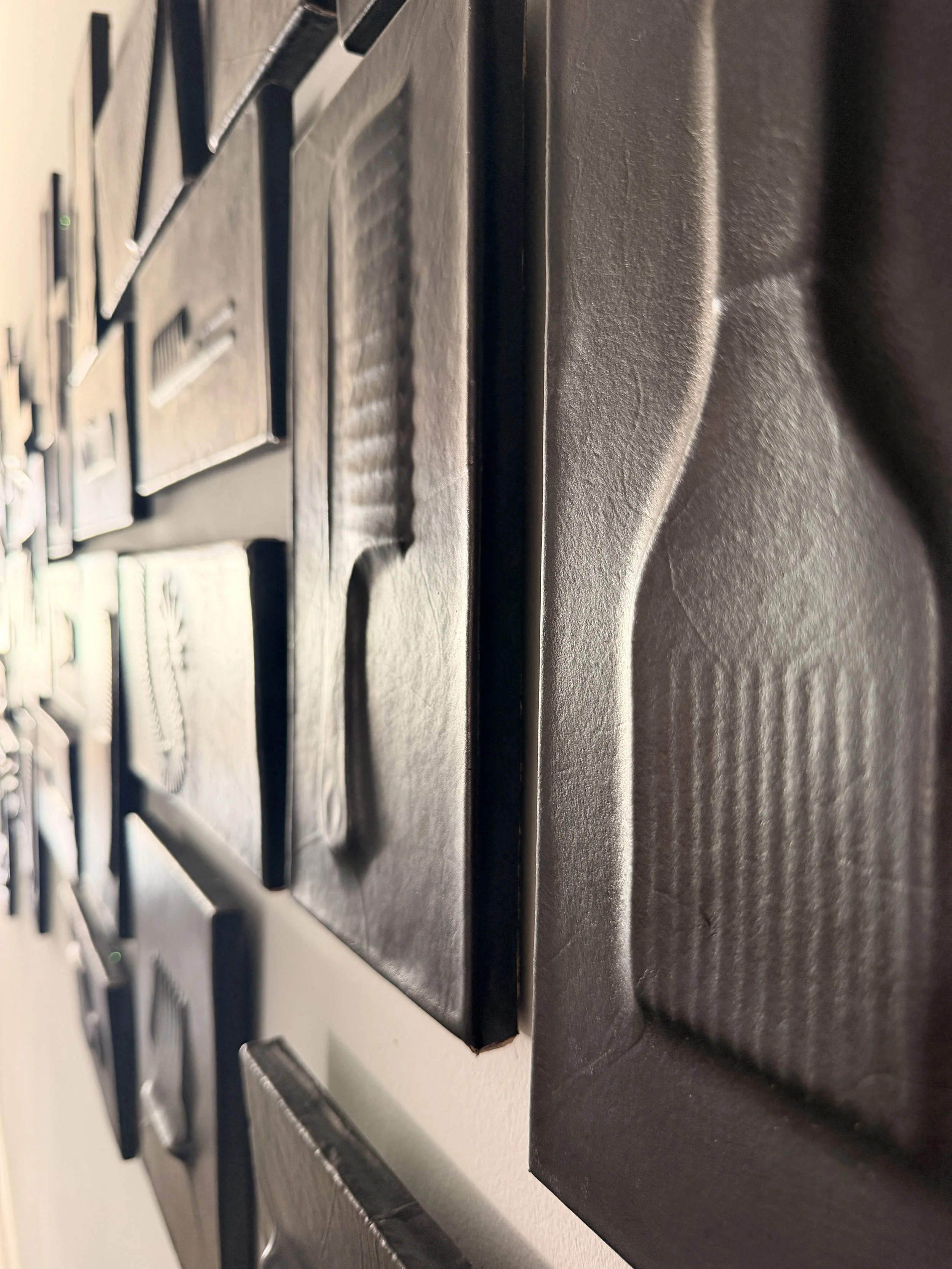
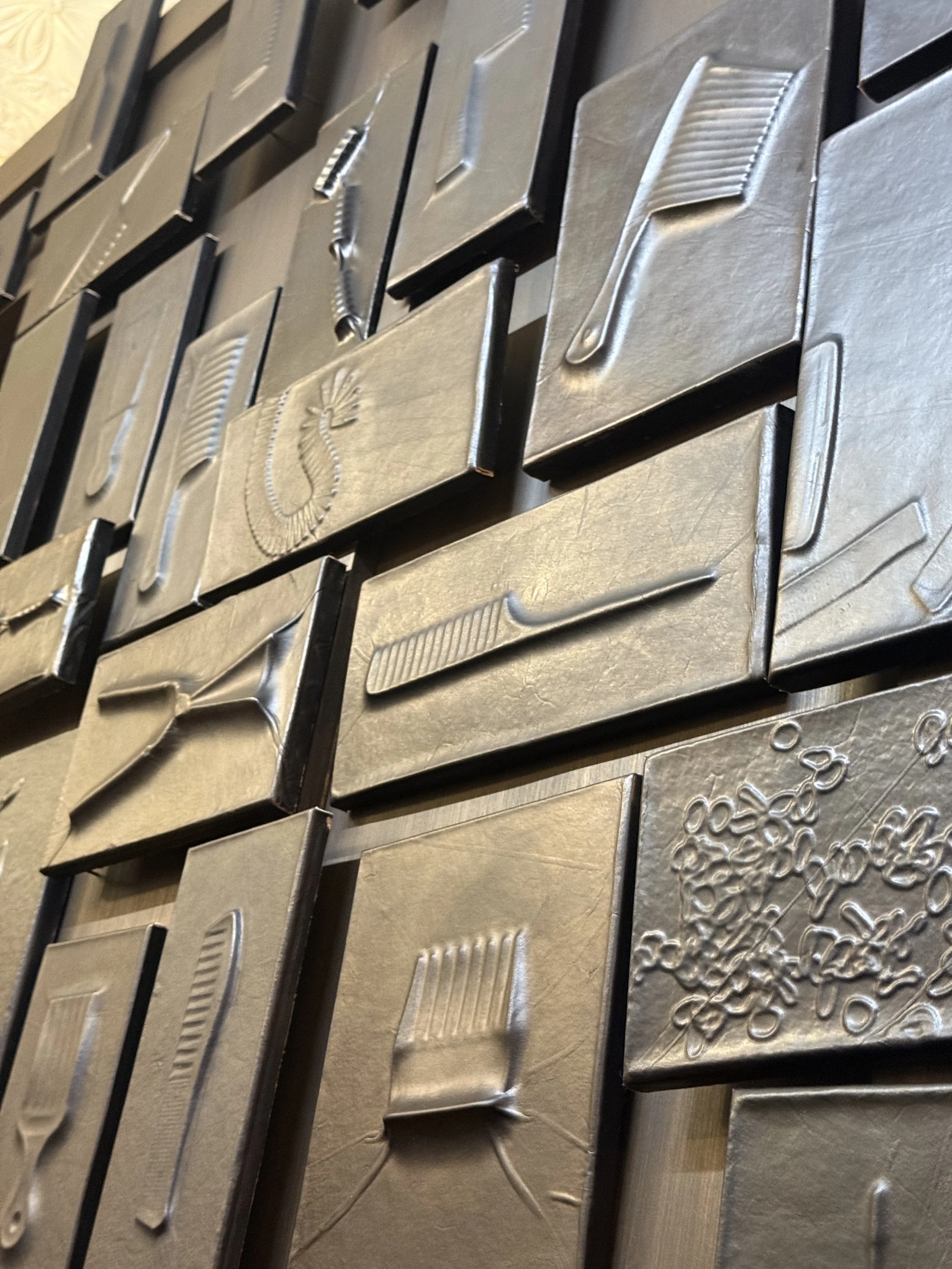
These impressions function as fragments rather than complete narratives. Each preserves a trace of an object once held, used, and returned countless times.
Gathered together, they suggest that memory is rarely contained within a single thing, but instead lives across many small moments that accumulate over a lifetime.
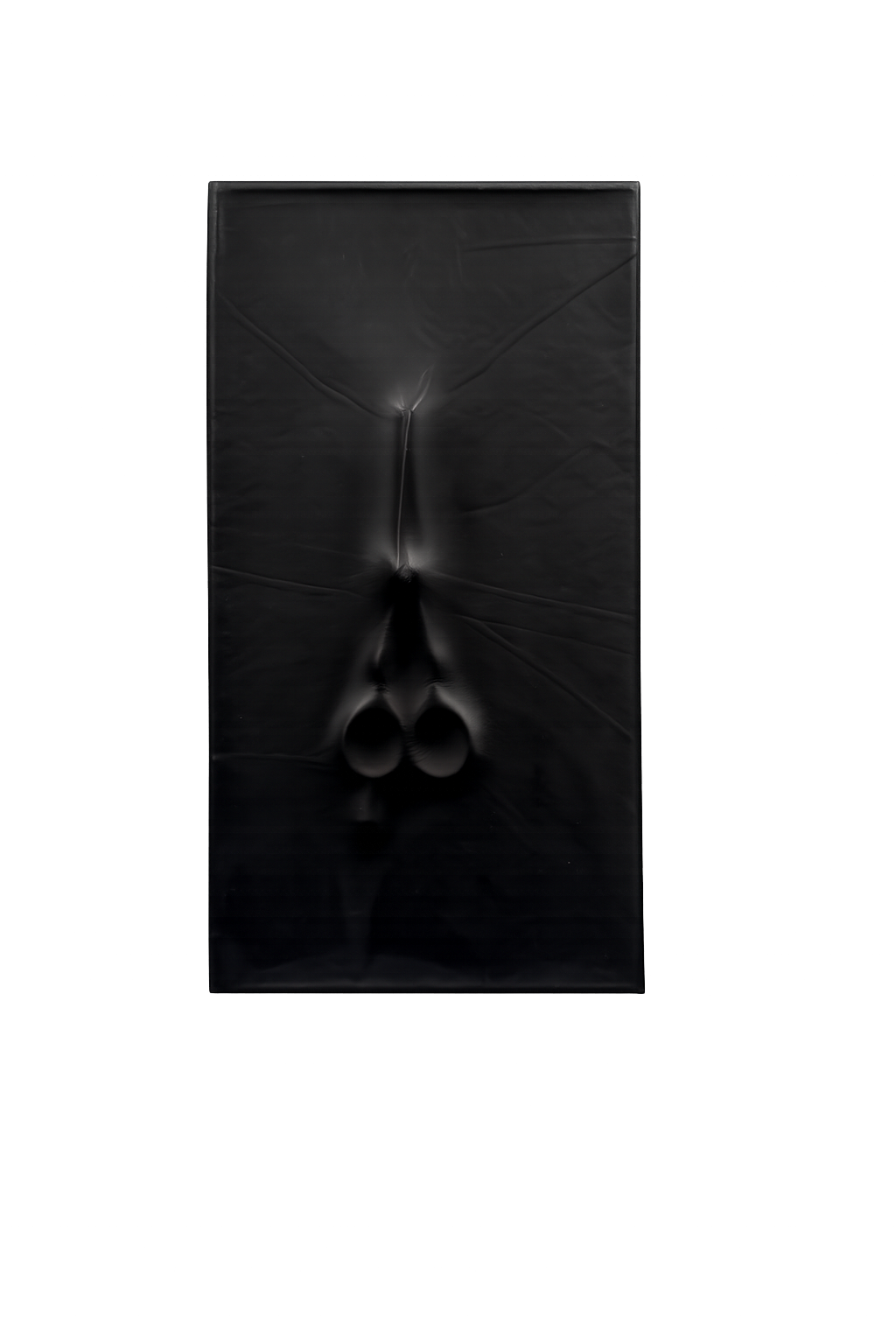
One of 37 individual works from the REMNANTS series.
Hand-molded vegetable-tanned leather
Individually hand-dyed using multiple dyeing techniques to create depth and tonal variation
Buffed, conditioned, and finished by hand
Mounted to a wood panel
One-of-one original artwork
Approximate weight: 1 lbs
12” × 6”
Vegetable-tanned leather is a natural material that retains the marks, scars, wrinkles, and variations accumulated throughout the animal's life. These characteristics are intentionally preserved rather than concealed, allowing each piece to retain the authenticity of the material. Minor surface variations, impressions, and tonal shifts are not imperfections—they are an integral part of the work and ensure that no two pieces can ever be identical.
These impressions function as fragments rather than complete narratives. Each preserves a trace of an object once held, used, and returned countless times.
Gathered together, they suggest that memory is rarely contained within a single thing, but instead lives across many small moments that accumulate over a lifetime.
One of 37 individual works from the REMNANTS series.
Hand-molded vegetable-tanned leather
Individually hand-dyed using multiple dyeing techniques to create depth and tonal variation
Buffed, conditioned, and finished by hand
Mounted to a wood panel
One-of-one original artwork
Approximate weight: 1 lbs
12” × 6”
Vegetable-tanned leather is a natural material that retains the marks, scars, wrinkles, and variations accumulated throughout the animal's life. These characteristics are intentionally preserved rather than concealed, allowing each piece to retain the authenticity of the material. Minor surface variations, impressions, and tonal shifts are not imperfections—they are an integral part of the work and ensure that no two pieces can ever be identical.